Why Qtenboard Chooses Anti-GlareArbaHigh-Transparency Screens for Different Interactive Displays
When it comes to screens, not all glass is created equal. At Qtenboard, we carefully choose anti-glareArbahigh-transparency (high-transmittance) glass for each type of product — from interactive whiteboards to kiosks, digital signage, and stand by me TV. But why exactly? And what technical considerations drive these decisions?
In this article, we’ll dive into:
- The difference between anti-glareIrhigh-transparency screens
- Why each Qtenboard product category gets a specific treatment
- The technology behind screen coatings and optical materials
- How these choices affect performance, user experience, and longevity
- Tips for customers on how to choose the right display for their environment
By the end, you’ll understand not only the “what” but also the “why” behind Qtenboard’s screen selections, and why factory-level expertise matters.
Why Screen Material Matters
At first glance, it may seem like a screen is just a screen. But in reality, the choice of glass or coating dramatically affects image clarity, visibility under bright conditions, touch accuracy, and long-term durability.
Consider the environments where our displays are used:
- Classrooms and meeting rooms with lots of overhead lighting
- Shopping malls with reflective surfaces and bright sunlight
- Offices and corporate environments with controlled lighting but high interaction
- Smart home companion devices, often viewed from multiple angles
Each scenario presents different challenges. The wrong screen treatment can result in:
- Excessive glare and reflections
- Washed-out colors
- Eye fatigue for users
- Reduced touch sensitivity and accuracy
- Poor perception of product quality
Qtenboard addresses these challenges systematically, tailoring materials to the use case rather than applying a one-size-fits-all approach.
Anti-Glare vs High-Transparency Glass: What’s the Difference?
Anti-Glare Screens
Anti-glare screens are designed to diffuse ambient light, reducing reflections from overhead lights, windows, or sunlight.
Key points:
- How it works: Microscopic surface etching or optical film layers scatter incoming light.
- Effect: Reduces specular reflections without significantly lowering brightness.
- Best for: Interactive whiteboards (IWBs) and “Guimi” smart devices.
Why IWBs and stand by me TV benefit:
- Users often write, draw, or annotate on the screen. Reflections would make this difficult.
- Anti-glare preserves touch accuracy.
- Reduces eye strain during long sessions.
High-Transparency (High-Transmittance) Glass
High-transparency glass, on the other hand, maximizes light transmission, ensuring that the display’s brightness and contrast are fully visible, even under challenging lighting conditions.
Key points:
- How it works: Optically clear tempered glass with minimal coatings.
- Effect: Preserves color vibrancy, contrast, and overall image quality.
- Best for: Digital Signage and kiosks, where visual impact and image clarity are the priority.
Why Ads and Kiosks benefit:
- Advertisements need bright, vivid colors to attract attention.
- Kiosks rely on crisp visuals for interactive menus and information.
- Glare reduction is less critical because these devices are usually mounted vertically, and users are typically viewing from a consistent angle.
Technical Insights Behind Qtenboard’s Choices
Qtenboard doesn’t randomly assign coatings — each choice reflects optical physics, touch engineering, and user ergonomics.
Optical Coatings and Films
- Anti-glare panels use matte films or nano-etched layers that diffuse light evenly.
- High-transparency panels use hard-coated glass or ultra-clear tempered layers that maintain full brightness and color fidelity.
Touch Sensitivity Calibration
- Anti-glare layers slightly alter the optical path, so touch sensors are calibrated to compensate for any minor refraction changes.
- High-transparency glass preserves near-perfect direct contact with touch electrodes, maintaining fast and accurate response.
Durability and Scratch Resistance
- Both anti-glareIrhigh-transparency panels are treated to achieve ≥6H hardness, preventing scratches during daily use.
- Anti-glare coatings also reduce fingerprints and smudges, which can scatter light and reintroduce glare.
Brightness Optimization
- Qtenboard carefully balances panel backlight brightness with surface treatment.
- Anti-glare layers do not require excessive backlight power, protecting users’ eyes.
- High-transparency panels allow lower reflectance losses, keeping images vivid without additional energy use.
Environmental Adaptation
- Classrooms and office IWBs often have variable lighting; anti-glare ensures consistent legibility.
- Public advertisement spaces require maximum visual impact; high-transparency preserves the content’s original quality.
Why Qtenboard Implements Product-Specific Screen Solutions
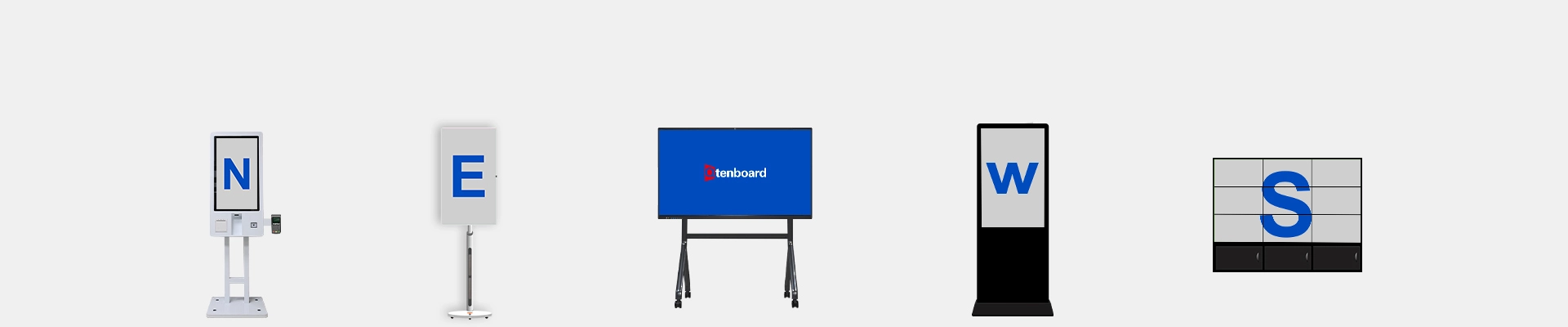
Here’s a breakdown of Qtenboard’s logic for each product category:
| Product |
Screen Treatment |
Why |
| Interactive Whiteboards (IWB) |
Anti-Glare |
Users write, draw, and annotate; reduces reflections; enhances touch accuracy and reduces eye fatigue |
| Stand by me tv |
Anti-Glare |
Multi-angle viewing in homes/offices; anti-reflective surface for comfort during prolonged use |
| Skaitmeniniai ženklai |
High-Transparency |
Maximizes brightness and color fidelity; visually impactful for retail/public spaces |
| Kiosks |
High-Transparency |
Preserves clarity and vibrancy for interactive menus; users view from fixed angles; reflection less critical |
This category-specific approach allows Qtenboard to deliver optimal performance for each use scenario, rather than a compromise that satisfies no one.
How Qtenboard’s Factory Ensures Quality
Many manufacturers rely on off-the-shelf glass or aftermarket films. Qtenboard applies all coatings at the factory, combining robotic precision and manual verification:
- Robotic Lamination: Ensures uniform anti-glareArbahigh-transparency layers with no bubbles, scratches, or uneven thickness.
- Manual Verification: Skilled technicians inspect for optical uniformity, touch accuracy, and surface smoothness.
- Long-Hour Testing: Panels are run through extended touch, brightness, and environmental simulations to ensure performance stability.
- Calibration: Touch sensors, brightness, and color reproduction are finely tuned to each surface treatment.
This integrated approach guarantees that users get exactly the visual experience they expect — no surprises, no compromise.
How to Choose the Right Display for Your Project
When selecting a Qtenboard panel, consider:
User Interaction Type
- Writing, annotating, or drawing → Anti-glare is essential
- Viewing content only → High-transparency may be better
Lighting Conditions
- Bright, reflective environments → Anti-glare reduces eye strain
- Controlled lighting or indoor public spaces → High-transparency preserves vivid colors
Viewing Angle and Distance
- Multi-angle, close-up usage → Anti-glare avoids hotspots
- Fixed, vertical, or large-scale signage → High-transparency maximizes visual impact
Longevity and Maintenance
- Anti-glare coatings reduce fingerprints and smudges
- High-transparency glass easier to clean for public use
Factory Assurance
Always check that the manufacturer applies coatings at the factory, rather than aftermarket. Qtenboard guarantees uniformity, touch accuracy, and durability.
FAQ: Anti-Glare vs High-Transparency Screens
Q1: Can I switch the screen type later?
A: No, the coating is integrated at the factory. Qtenboard’s approach ensures durability and optical precision, which aftermarket changes can’t guarantee.
Q2: Does anti-glare reduce screen brightness?
A: Minimal reduction occurs, but Qtenboard calibrates brightness to maintain visual clarity while reducing reflections.
Q3: Why not use anti-glare for all products?
A: In advertisement and kiosk displays, preserving full brightness and color fidelity is more important than glare reduction; these devices are typically mounted in ways that minimize reflections.
Q4: How durable are these coatings?
A: Both anti-glare and high-transparency panels are scratch-resistant (≥6H) and fingerprint-resistant for professional daily use.
Q5: Will touch sensitivity be affected?
A: No. Qtenboard calibrates touch sensors for anti-glare surfaces to ensure precise, responsive interaction.
Santrauka
Screen material choice is not just a cosmetic decision — it affects clarity, comfort, usability, and longevity.
Qtenboard’s philosophy:
- Anti-glare for interactive, multi-angle, long-duration use (IWBs, Standbyme TV)
- High-transparency for visual impact and color fidelity (ads, kiosks)
This approach is supported by:
- Factory-applied coatings
- Robotic lamination + manual inspection
- Touch calibration and brightness optimization
- Scratch resistance and long-term reliability
By tailoring screens to the environment and application, Qtenboard ensures each display delivers the best possible user experience, backed by technical expertise and professional manufacturing standards.
In short: The right screen material makes all the difference — and Qtenboard designs it, integrates it, and validates it in-house for every product category.
 LIT
LIT
 EN
EN  RU
RU  ARM
ARM  UKR
UKR  LAV
LAV  BEL
BEL  EST
EST  AZE
AZE