In today’s fast-paced digital world, traditional static posters and printed banners are no longer enough to capture audience attention — whether it’s in retail stores, corporate lobbies, transportation hubs, or educational buildings. Audiences now expect dynamic, timely, and interactive displays that not only show information but engage, influence, and adapt.
This evolution has given rise to digital signage solutions — intelligent display systems that combine hardware, software, and content management to deliver targeted messaging, promotions, wayfinding, real-time data, and interactive experiences. But with countless vendors, varying technologies, and a wide range of implementation options, choosing the right digital signage solution can be overwhelming.
This article breaks down everything you need to know: what digital signage is, how it works, why it’s valuable, how it compares to traditional signage, what components make up a strong solution, how to choose the best one for your scenario, and common questions businesses often ask.
Digital signage solutions are systems that use electronic displays such as LCD, LED, or projection screens to broadcast content — often controlled remotely — to inform, entertain, advertise, or guide audiences. Unlike traditional printed signs, digital signage allows:
Digital signage can be deployed in single locations or across complexes and global networks, making it one of the most versatile communication tools available today.
| Funkcija | Traditional Signage | Skaitmeniniai ženklai |
|---|---|---|
| Turinys | Printed, static | Dynamic, digital |
| Atnaujinimai | Manual reprint | Remote instant update |
| Engagement | Passive | Interactive |
| Cost Over Time | Ongoing printing costs | Initial hardware + software, lower ongoing cost |
| Duomenų integracija | Nė vienas | Supports real-time feeds |
| Personalization | Nė vienas | Audience-targeted messaging |
| Analytics | Nė vienas | Viewership data and performance tracking |
People are naturally drawn to movement, brightness, and changing displays. Digital screens capture attention better than static signs, increasing dwell time and message recall — whether in retail aisles or corporate spaces.
Digital signage systems allow teams to update content across one or thousands of screens using a centralized software platform. Instead of reprinting materials across multiple locations, content can be updated instantly, reducing cost and improving consistency.
With digital signage, businesses can deliver time-based promotions, display real-time data such as news or social feeds, and tailor messaging based on audience or location. This contextual ability significantly improves relevance and impact.
In retail environments, digital signage can guide shoppers to products, showcase promotions, and support self-service kiosks. In airports and transit hubs, signage improves wayfinding and reduces confusion.
While digital signage requires upfront hardware and software investment, long-term costs are lower than continuously printing and installing static media. Automated scheduling reduces labor costs.
Modern digital signage platforms collect performance data, such as screen views, content engagement, interaction rates, and audience demographics. This level of insight helps businesses optimize content strategy and measure ROI.
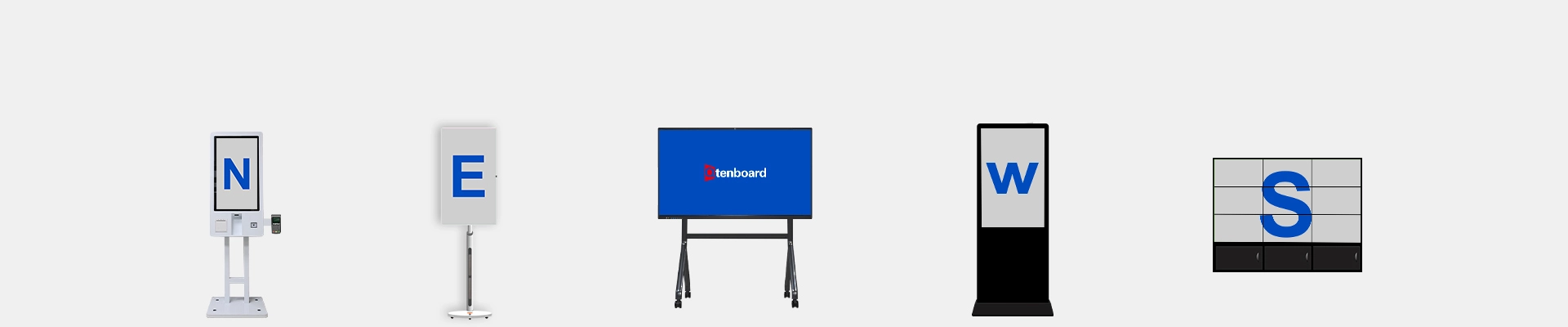
Displays can be LCD/LED panels, video walls, outdoor displays, or interactive kiosks. The choice depends on environment, viewing distance, and content type.
Displays can run content via external media players or built-in SoC, balancing power, flexibility, and simplicity.
The CMS is the brain, allowing scheduling, template management, remote publishing, and multi-location control. Cloud-based CMS enables team collaboration and remote operations.
Digital signage often connects via Wi-Fi, Ethernet, IoT sensors, POS systems, mobile devices, and external data sources for dynamic and data-driven content.
Dashboards display view counts, interaction data, engagement times, and content performance to optimize strategy and ROI.
Most modern systems work best with internet for remote updates, real-time feeds, and analytics. Offline playlists can still run without connectivity.
Costs vary widely depending on display size, interactivity, CMS features, and installation complexity. Basic setups start with display and CMS subscription; advanced solutions add sensors and integrations.
Yes, digital signage can integrate with APIs to display live weather, traffic, social feeds, or sales dashboards.
Even a single display with targeted content can increase customer engagement, boost promotions, and improve wayfinding.
Small setups can install in hours; large multi-screen networks take days to weeks depending on infrastructure.
Most solutions come with intuitive CMS. Basic content updates are usually easy after minimal training.
Digital signage solutions are strategic tools that inform, engage, and influence audiences in real time. Understanding components, comparing digital to traditional signage, selecting the right software and hardware, and designing effective content unlocks engagement, analytics, and business value.
 LIT
LIT
 EN
EN  RU
RU  ARM
ARM  UKR
UKR  LAV
LAV  BEL
BEL  EST
EST  AZE
AZE